

Jump to:
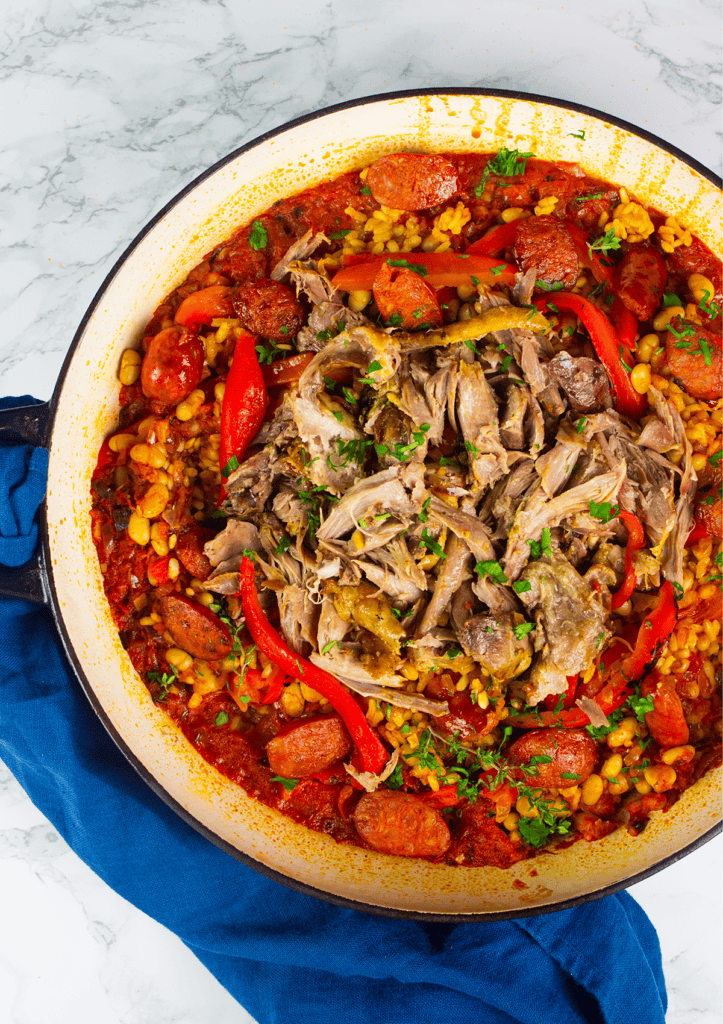
This is a mouthwatering meaty duck and chorizo paella inspired by another classic duck and sausage recipe, cassoulet, the iconic French confit duck, morteau pork sausage and bean stew. With this Spanish and French fusion recipe, bomba rice, the Valencian short grained rice traditionally used in paella, soaks up the delicious flavours of a smoky paprika, saffron and tomato stock, spiked with meaty morsels of piquant chorizo and sublimely succulent confit duck legs. It’s all made a little bit heartier with haricot beans and sweet roasted red peppers.
Paella perfection
Paella is one of Spain’s most iconic dishes, it certainly incorporates Spain’s most constitutional ingredients. Coastal towns and villages showcase seafood gems such as plump prawns, briny sweet mussels and tasty squid bejewelled over a golden hued bed of rice whereas inner towns and villages place the spotlight more on meaty staples such as chicken or rabbit and especially chorizo. Whatever the star guest appearance is, the real star of the show and backbone to a great paella is the perfectly cooked rice flavoured with Spain’s most intrinsic produce; saffron, pimenton, garlic and tomato, anything else is simply not paella, no matter what goes on top.
There are also rules to follow to create an authentic paella and this paella recipe, although using inspiration from a classic cassoulet with the additions of confit duck and beans, the dish is still created observing the correct techniques and base ingredients.
Paella meets cassoulet
As well as the many regional variations of paella are on offer, French cassoulet also has its many regional varieties too, which in typical French fashion is still fiercely debated as to what local ingredients actually make the best version. What is clear, however, is the family-style serving, local pride, and a deep sense of place that both these dishes have to offer. So, it makes perfect sense to enfuse the deliberately slow cooked rich cassoulet, a symbol of French rusticity and the vibrant celebratory rice dish of Valencia in one centre piece for any respectable Mediterranean table.
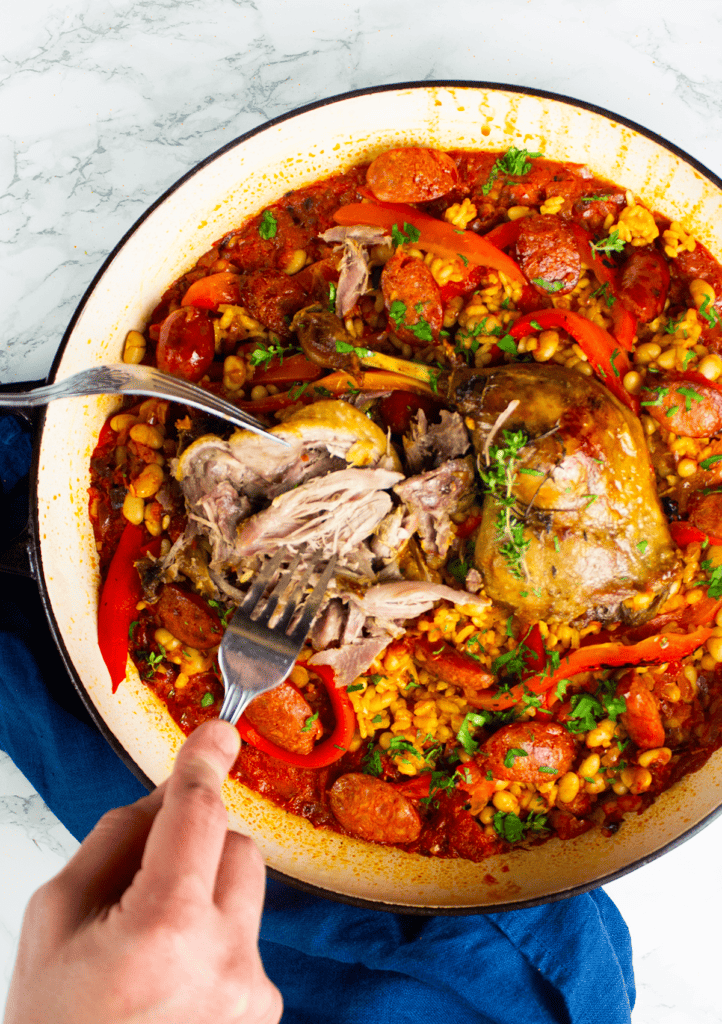
Once broken down, these two iconic dishes are not worlds apart. Paella is a rice dish cooked in stock, cassoulet is a bean dish cooked in stock. The base for a paella uses a Spanish soffrito, finely chopped onions, celery, carrot, garlic and peppers, whereas the cassoulet uses the french version, mirepoix, onions, celery, carrots and leeks. Tomatoes are used in both, as of course are the medley of meats that create the variations in both dishes, of course here, we have focused on the duck and sausage aspect. Once cooked, both also showcase a crispy crust. For paella, the socarrat, a particularly savoured aspect where the bottom layer of rice in the pan crisps up as the rice is never stirred, and with the cassoulet, a wonderful crisp gratinated layer of breadcrumbs scattered on top. Of course, cassoulet is slowly cooked to enrich the flavours naturally and creates a warming stew, whereas paella is a much quicker dish to prepare that generally relies on the fresh and vibrant ingredients intrinsic to spain in paprika, garlic and saffron. By taking a leaf out of the french book of cooking though and incorporating it into a paella, we have a rich and robust flavour from the slow cooked way, balanced with the lighter sun-kissed tones of paella. Simply Mediterranean magic.
Arguably, the most famous iteration of cassoulet is not the original as it uses duck and pork sausages on top of the bean stew, a regional variation from Toulouse. The original recipe hails from Castelnaudary in the Languedoc region which uses just pork produce such as pork loin, ham, leg, rind and sausages. Another classic regional variation from Carcassonne primarily uses mutton, but other seasonal meats such as goose, game as well as pork or mutton are commonplace. “Larousse Gastronomique” categorises these regional variations as the Father, Son and Holy Ghost of cassoulet. Toulouse being the Holy Ghost and most widely replicated on menus outside of France.
You can of course use the other meats mentioned for this cassoulet paella recipe but of course they must be slow cooked first.
The process for the rice / paella contingent of this recipes is simple and is made in one pan. To cook the duck however, it is best to confit some duck legs, or use already cooked confit duck.
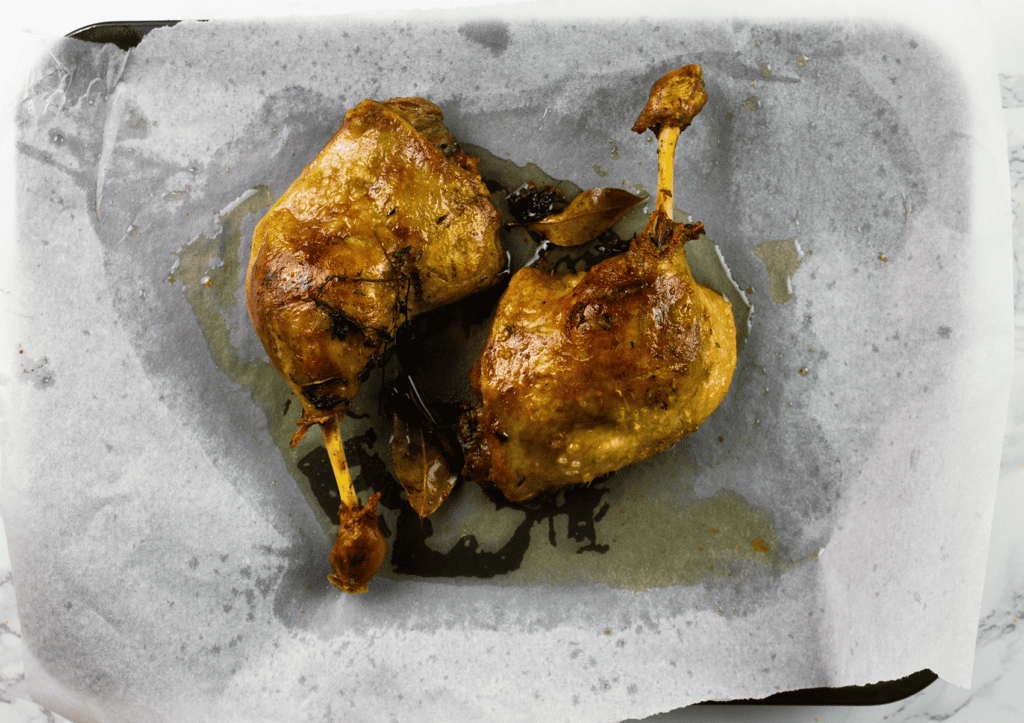
Confit duck: slow-cooked, flavour-packed, ready when you are
To confit the duck means to cover the meat in fat or oil and cook on a low temperature. Confit comes from the french verb confire meaning to preserve, so once the meat is cooked, it can be left covered in the cooled fat and can be stored for a long time as long as it continues to be sealed. Olive oil or vegetable oils are adequate to use but fats such as goose or duck (as is traditionally used with confit duck) are preferable but also come with added cost. So with a recipe such as this duck and chorizo paella, you can make your confit duck well in advance and simply heat it up under a hot grill to crisp up the skin whilst preparing the paella. Store bought slow cooked duck legs or confit duck from a tin are also highly recommended to use.
To make the paella, a wide paella dish is recommended, if not a wide shallow casserole dish.
What chorizo brings to the table
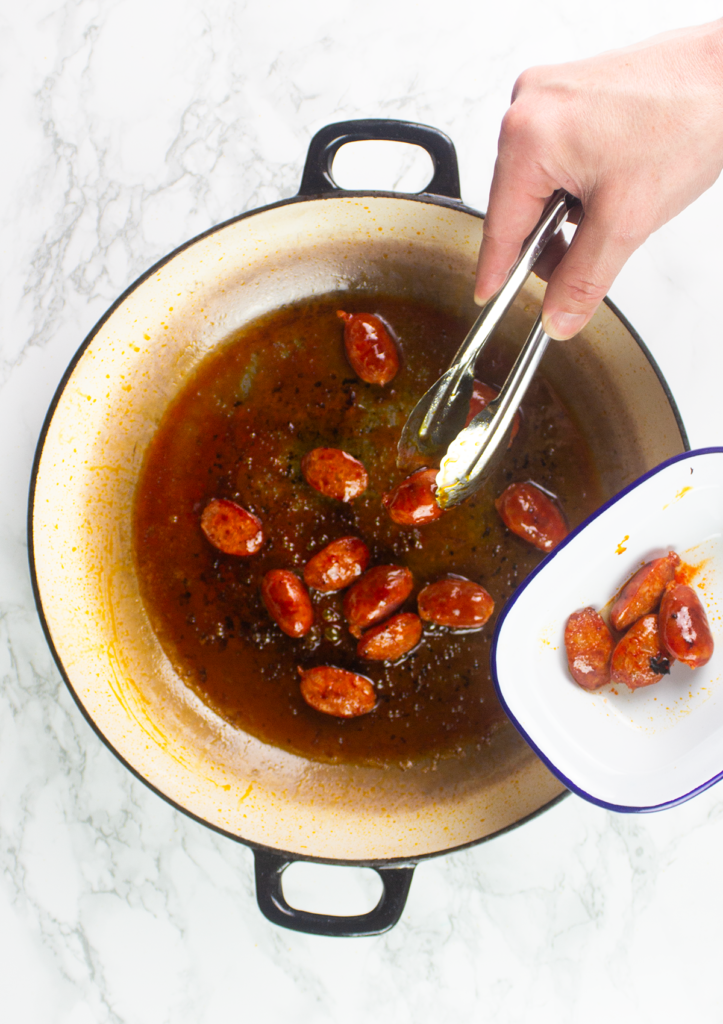
First of all, we want to extract much of the flavour from the chorizo to impart its smokiness and spicyness into the rest of the dish. For this reason, it is best to use cooking chorizo rather than cured chorizo. The texture is far softer too which is better in the finished dish. Chop the cooking chorizo up into bite size pieces and add them with a little olive oil to the paella or casserole dish on a medium heat. The sausage will sear and release lots of wonderful flavoursome golden oils. After approximately 4-5 minutes, remove the chorizo pieces, leaving all of the released oil in the pan and reserve for later. Add a chopped onion into the oil to soak up all that flavour and fry for another 5 minutes. Add some fresh grated garlic and smoked paprika and stir through the onions. Once the contents of the pan have softened, add a little orange juice for sweetness which will pair well with the duck in the finished paella. Let the juice reduce until almost gone then add some rich chopped tomatoes or passata and the chicken stock flavoured with a few strands of saffron, then simmer to bring out the rich flavour.
Let it cook, don’t stir
Paella rice goes in next along with some haricot beans for that cassoulet fusion. Short grained rice such as bomba or calasparra are traditional rice varieties. Then mix the rice evenly in the pan. At this point leave the rice to soak up all the liquid and do not stir it anymore. This is an important rule as stirring would release the starch from the rice and give it a creaminess like risotto which is the wrong texture. As a result of just leaving the rice alone the bottom layer of the rice will crisp up which is known as socarrat. This part is savoured as a delicacy and a highly desirable aspect of any true paella.
You only need to simmer the rice at this part for 10-12 minutes. Turning the heat up for the last couple of minutes will help create the toasted rice soccorat, then you can arrange the cooked confit duck legs on top with some slices of roasted red pepper. A final flourish of chopped parsley adds colour or optionally you can scatter some breadcrumbs with a little garlic and parsley and gratinate under the grill if you want to lean into cassoulet’s traditional crust.
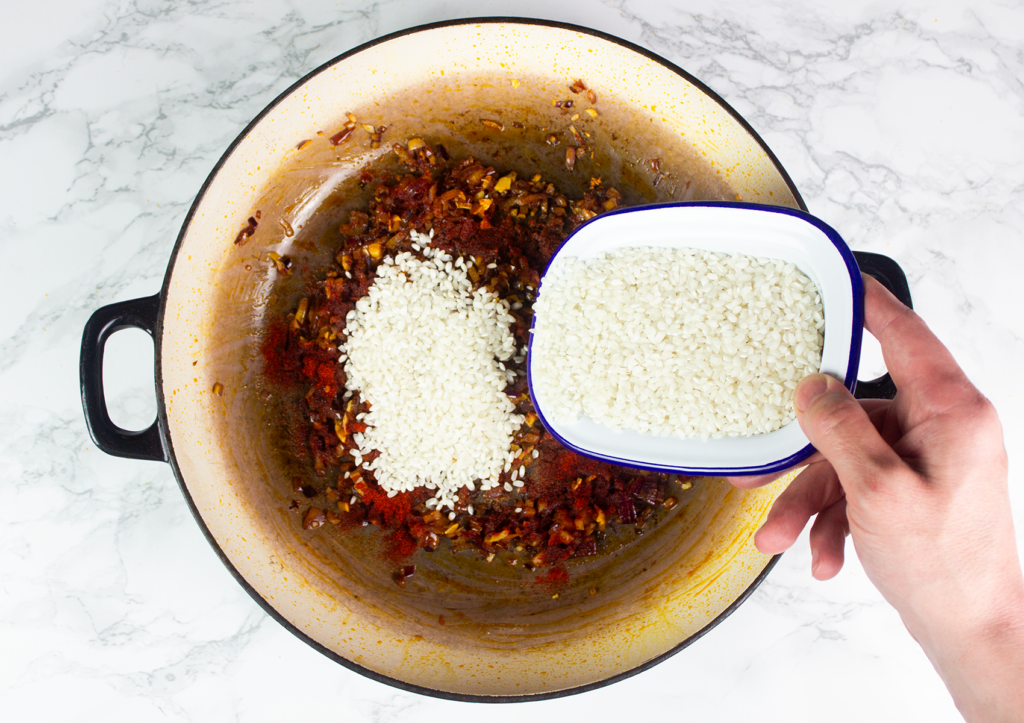
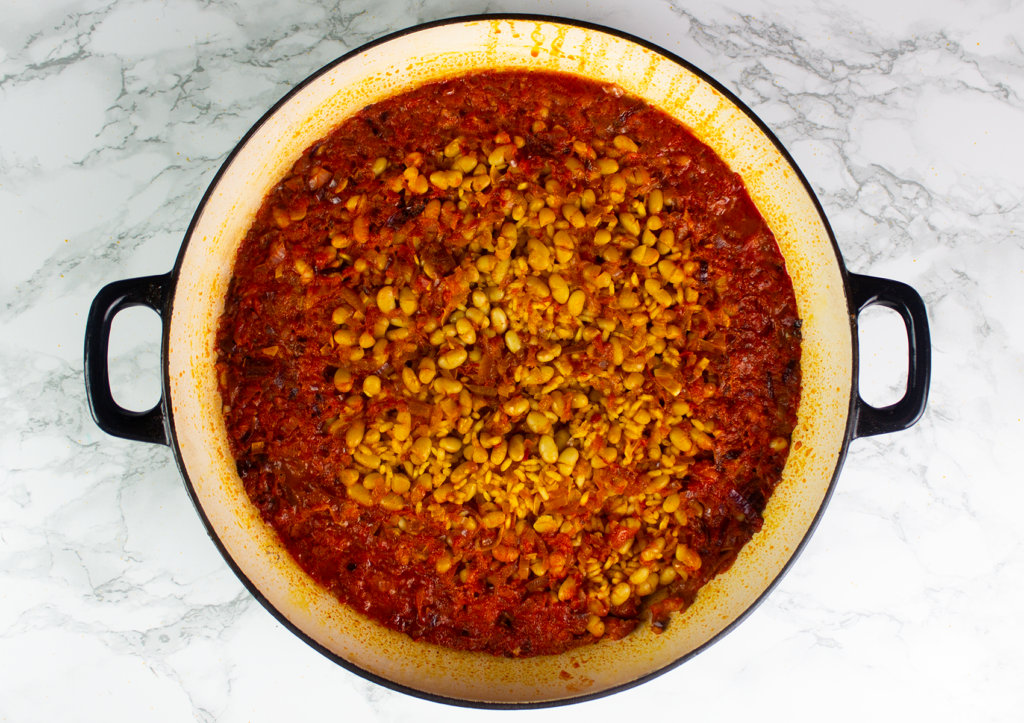
The cassoulet aspect in this gives a comforting, layered richness with the paella giving it its colour, texture, and warmth. Together, this duck paella recipe is something new but rooted in something old.
However, this is a dish that invites interpretation: You can add mussels or prawns for a coastal flare, swap duck for roasted chicken thighs if you want a lighter protein or use vegetable stock and mushrooms for a vegetarian twist.
This duck paella dish doesn’t replace either cassoulet or paella. Instead, it’s an homage to both, a way of exploring the possibilities when culinary traditions are treated with curiosity and appreciation.
More duck recipes
Indian Burrito with Pulled Duck
Duck Enchiladas with Orange and Chipotle
The Most Incredible Tamarind Duck Recipe
Latest recipes


Duck paella recipe
Ingredients
- 2 pre-cooked confit duck legs * home-made duck confit method below
- 8 small cooking chorizos chopped in quarters
- 1 onion finely chopped
- 250 g of bomba rice
- 200 ml of chopped tomatoes or passata
- 40 ml of orange juice
- 500 ml of chicken stock
- 10 saffron strands
- 1 tablespoon of smoked paprika
- 1 large clove of garlic grated
- 1 roasted red pepper cut in slices
- 180 g 1 cup of haricot beans
- Chopped parsley for garnish
- 3 tablespoon of breadcrumbs optional
Instructions
*(Home cooked confit duck)
- Rub sea salt and pepper over each leg (35g of salt will season 4 legs) and rest in the fridge for 24 hours.
- Wipe all the salt off and place the legs in an oven proof dish with a whole head of garlic and fresh rosemary, thyme and bay leaf. Cover the legs entirely in goose or duck fat, approximately 500g, (vegetable or olive can be used) and place into a 140℃ oven for 2 ½ hours. Leave to cool keeping the duck sealed in the fat, transfer to a large preserving jar until ready to use. (The duck can be stored in a bowl, as long as it is covered in fat, it will last for weeks)
- Reheat the confit duck legs in a 200℃/392℉ oven for 15-20 minutes until the skin is crispy, leave in a warm place.
- Add the cooking chorizo pieces to a shallow case iron casserole dish or paella dish with a little olive oil and fry on a medium heat for 4-5 minutes. Remove from the pan and reserve leaving the flavoured oil in the pan.
- Add the chopped onion and stir into the oil and fry for a 4-5 minutes. Add the garlic and paprika and fry for a further 2-3 minutes.
- Deglaze the pan with the orange juice and reduce. Prepare the chicken stock and add the saffron strands to infuse. (tip, grind the saffron in a pestle and mortar first for more colour and flavour) Add the passata or chopped tomatoes and chicken stock and bring to a simmer.
- Add the rice and haricot beans and smooth out across the dish. Leave to simmer for 12 mins or until the rice has absorbed most of the stock, do not stir. Once the liquid has almost gone, turn up the heat for 1-2 minutes to create the socarrat.
- Arrange the duck legs and roasted red pepper over the paella. Optionally, sprinkle over a mixture of breadcrumbs, garlic and parsley and place under a hot grill for 1-2 minutes to create a crisp crumb and serve.
Leave a Reply