

Jump to:
- Why Duck Breast Is Different
- What Makes Duck Skin Truly Crispy?
- Duck Breast Temperature Guide
- Step-by-Step: How to Cook Duck Breast (Pan-Seared)
- Common Mistakes When Cooking Duck Breast
- Duck Breast versus Duck Leg (When to Use Each)
- Turning Crispy Duck Breast Into Global and Fusion Dishes
- Crispy Duck Breast How-To Recipe

Crispy duck breast depends on controlled fat rendering, moderate heat and disciplined resting. Unlike chicken, duck breast performs best at medium-rare to medium, where crisp skin gives way to tender pink flesh.
Beneath the skin lies a thick layer of fat that must render gradually before true crispness can develop. Handled correctly, that fat becomes an advantage — creating lacquered, golden skin while quietly basting the meat beneath.
This guide walks through the controlled pan-seared method step by step, including timing, internal temperature and the reasoning behind each stage.
To see how this foundational technique translates into global flavour combinations, explore more in our best fusion duck ideas and techniques.
Why Duck Breast Is Different
Duck breast behaves closer to steak than to lean chicken in both structure and ideal doneness. The meat is dense and deeply flavoured, protected by a substantial fat layer that rewards careful handling. Treating it like chicken — cooking it quickly at high heat until fully firm — misses its strengths entirely.
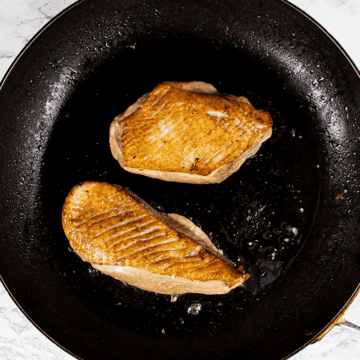
That fat layer isn’t a flaw to overcome — it defines the cut. When rendered gradually, it transforms the dish. The skin tightens and dries as fat escapes, creating a crisp, lacquered surface. At the same time, the melting fat gently bastes the meat, protecting it from harsh heat and preserving tenderness.
The objective isn’t simply colour — it’s controlled rendering. Browning without rendering produces skin that looks crisp but tastes heavy. Proper rendering produces skin that shatters lightly under the knife and meat that remains supple beneath it.
Duck rewards patience and control. Once you understand how the fat behaves, the rest becomes predictable.
What Makes Duck Skin Truly Crispy?
Truly crisp duck skin comes from fat management, not aggressive heat. Rendering is a controlled process in which the subcutaneous fat melts gradually, allowing moisture to escape from the surface of the skin before browning begins.
As the fat renders, three things happen simultaneously: excess fat drains away, surface moisture evaporates, and the skin tightens against the pan. Only once the surface is sufficiently dry can browning occur cleanly and evenly.
Introducing high heat too early disrupts the process. The skin sears before the fat has had time to melt, trapping moisture beneath the surface. The result may appear golden at first glance, but the texture remains soft and rubbery rather than crisp.
Crispness is therefore not created by intensity — it is created by patience. Controlled heat allows the skin to set properly, and once it does, colour follows naturally.
Duck Breast Temperature Guide
Duck breast is best treated more like steak than lean poultry when it comes to doneness. Because of its fat layer and dense muscle fibres, it retains tenderness and flavour when served medium-rare to medium. The goal is not simply to cook it through, but to cook it to a point where the fat has rendered and the meat remains supple beneath crisp skin.
For medium-rare, aim for an internal temperature of 54°C / 130°F measured at the thickest part of the breast. At this stage the centre will be deep pink, the texture tender, and the fat fully rendered beneath the skin.
For medium, cook to 60°C / 140°F. The centre will be blush pink rather than red, the texture slightly firmer but still moist. Many experienced home cooks prefer this range as it offers a balance between tenderness and structural integrity when slicing.
Above 65°C / 149°F, the meat begins to firm noticeably and loses some of its natural juiciness. While duck can be cooked further without becoming dry in the way chicken would, it loses the elegance that makes it distinctive.
As with all meat, allow for carryover cooking. Internal temperature will rise by approximately 2–3°C during the resting period. Removing the duck slightly before your target temperature and resting it properly ensures greater control over the final result.
Texture is the real indicator. At medium-rare, the meat should feel gently springy when pressed; at medium, it should offer firmer resistance but still yield slightly under pressure.
Mastering temperature preserves texture and balance. Understand where duck performs best and consistency follows.
A digital thermometer provides precision, but with experience your hands will recognise the difference.
Step-by-Step: How to Cook Duck Breast (Pan-Seared)
- Score the skin lightly without cutting into the flesh.
- Pat the skin dry and season lightly.
- Place skin-side down in a cold, dry pan.
- Turn heat to medium-low and render slowly for 8–12 minutes, pouring off excess fat.
- Increase heat slightly once fat has mostly rendered to finish crisping.
- Flip and cook flesh side 2–3 minutes (or finish 6–8 minutes at 180°C for thicker breasts).
- Rest 5 minutes before slicing.
Once you understand the sequence — slow rendering, controlled heat, precise finishing — the method becomes reliably repeatable.
Common Mistakes When Cooking Duck Breast
Most problems with duck breast stem from impatience rather than difficulty.
Starting in a hot pan is the most common error. High initial heat seals the surface before the fat has had time to render, trapping moisture beneath the skin and leading to rubbery texture instead of crispness. Duck demands a gradual build of heat.
Cooking aggressively throughout produces a similar issue. When heat remains too high, the skin may brown quickly, but much of the underlying fat remains intact. The result is colour without proper rendering — visually appealing but heavy to eat.
Failing to manage the rendered fat can also compromise the final result. As fat accumulates in the pan, it should be carefully poured off. Leaving it to pool excessively can partially shallow-fry the meat rather than allowing controlled rendering.
Finally, skipping the rest period undermines everything that came before it. Without resting, internal juices rush out when sliced, leaving the meat drier and the board flooded. A brief rest allows the fibres to relax and the juices to redistribute, preserving both texture and flavour.
Duck breast isn’t fragile — but it does demand control. Respect the stages, and it performs reliably.
Duck Breast versus Duck Leg (When to Use Each)
Duck breast and duck leg are not interchangeable. They respond to heat differently and serve different purposes on the plate.
Duck breast excels when crisp skin and clean slicing matter. It’s ideal for dishes where the meat is presented in neat, even slices and the sauce is applied after cooking rather than integrated into it. Because the breast is leaner beneath the fat layer and cooks relatively quickly, it rewards precise heat control and benefits from being served medium-rare to medium. If the structure of the dish depends on texture contrast — crisp skin against tender meat — breast is the correct choice.
Duck leg, by contrast, is built for time. Its higher connective tissue content makes it better suited to slow cooking, roasting or braising, where the meat can soften gradually and become shreddable. This is the cut to use when flavours need to integrate deeply over longer cooking periods — spice-forward preparations, confit-style cooking or sauced dishes where the meat absorbs and carries seasoning rather than simply being coated with it.
Choosing the correct cut isn’t about preference — it’s about how each responds to heat. When the method matches the cut, duck becomes far more predictable and far more refined.
For a broader look at how different duck cuts behave across cuisines and flavour frameworks, explore our fusion duck guide.
Turning Crispy Duck Breast Into Global and Fusion Dishes
Once the technique is mastered, duck breast becomes a structural foundation rather than a finished dish. The crisp skin and tender interior act as a neutral but expressive base, ready to carry acidity, heat and layered aromatics from different cuisines.
In a Thai direction, sliced duck pairs naturally with tamarind, chilli and lime. The richness of the meat softens sharp acidity while the crisp skin provides contrast against glossy sweet–sour glaze. If you want to see that balance fully realised, explore our tamarind duck recipe.
In a Japanese-inspired format, the same slices can be placed over warm sushi rice and finished with a hoisin–ponzu glaze. The rice introduces gentle acidity and structure, while citrus-soy brightness keeps the fat clean and controlled. See how this works in our duck sushi recipe.
Move toward Mexican flavours and duck becomes smoke-forward and citrus-driven. Orange and chipotle bring warmth and lift, especially when folded into enchiladas where the meat can absorb sauce without losing its identity. Our duck enchiladas show how that integration works in practice.
In a Korean-American comfort context, thin slices layered into a soft roll with Gochujang-infused cheese sauce transform the same base technique into something bold and indulgent. The fermented depth of Gochujang complements duck’s richness rather than overwhelming it. Explore the structure in our duck philly cheesesteak.
For something lighter, chopped or sliced duck can be folded into crisp rice paper rolls with fresh herbs and a bright dressing. Here, texture and freshness carry as much weight as heat. See our crispy duck rice paper rolls for that variation.
The point is not novelty. It’s adaptability. Once the skin is properly rendered and the meat is cooked with control, duck breast adapts easily across cuisines.
Crispy Duck Breast How-To Recipe
Ingredients
- 2 large boneless duck breasts, skin on
- Fine salt
- Freshly ground black pepper, optional
Instructions
1. Score the Skin
- Using a sharp knife, lightly score the duck skin in diagonal lines, taking care not to cut into the flesh. Do not cut all the way to the edges of the skin.
2. Pat Skin Dry and Season
- Pat the skin thoroughly dry with paper towel. Season both sides lightly with fine salt and pepper (if using).
3. Start in a Cold Pan
- Place the duck breast skin-side down in a cold, dry frying pan. Turn the heat to medium-low and allow the fat to begin rendering gradually.
4. Render Slowly
- Cook for 12–16 minutes, allowing the fat to render gradually. Pour off excess fat carefully as it accumulates. Continue until the skin is deep golden and crisp.
5. Increase Heat Briefly
- Increase the heat slightly only once the majority of fat has rendered and the skin has set. Cook for 1–2 minutes to deepen colour.
6. Flip and Finish
- Turn the duck breast over and cook the flesh side for 2–3 minutes. For thicker breasts, transfer the pan to a preheated 180°C (350°F) oven for 6–8 minutes.
7. Rest
- Transfer to a plate or rack and rest for 5 minutes before slicing. Slice against the grain and serve.
Leave a Reply